
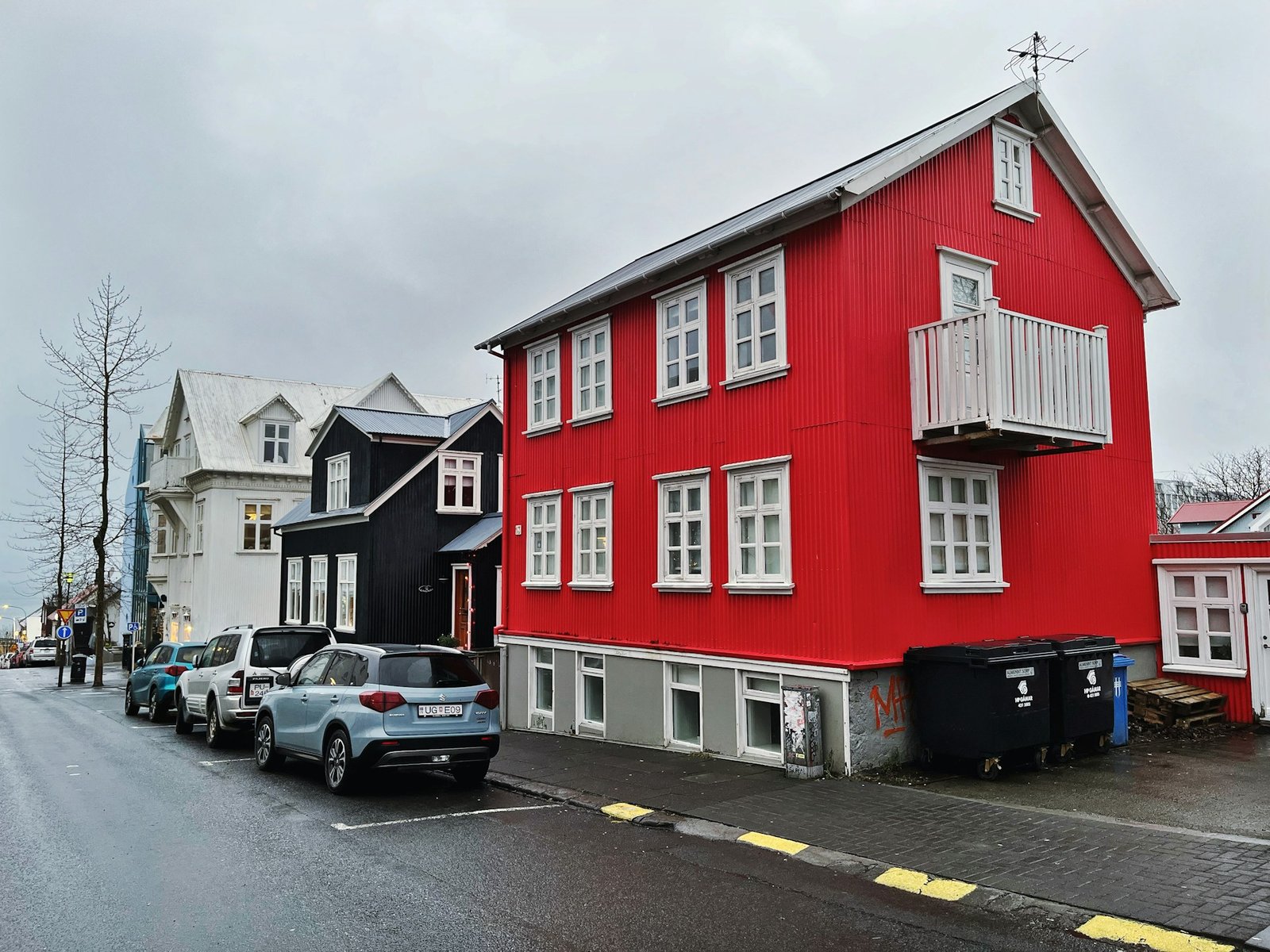
Photo by Thomas van der Zeeuw on Unsplash.
Last updated September 2026
Finding somewhere to live can be one of the trickier parts of moving to Iceland.
The rental market is relatively small, competition can be strong – particularly in Reykjavík and the wider capital region – and housing will take a substantial bite out of many newcomers’ budgets.
There is, however, clearer formal documentation than before. From 1 January 2026, residential tenancy agreements must be written and registered in the official HMS Rent Register. Iceland also has increasingly detailed rental-market data, although registered rents and current asking prices are not the same thing.
So, how difficult is it to rent in Iceland? How much should you budget? Where should you look? And what should you check before handing over a deposit?
Here’s what you need to know:
New for 2026: From 1 January 2026, landlords renting residential property are required to register tenancy agreements in the HMS Rent Register. Electronic agreements created through Ísland.is are automatically registered once fully signed. Read the official Ísland.is guidance on creating and registering a tenancy agreement
Who is this guide for?
This guide is for anyone planning to rent a home in Iceland, particularly people arranging accommodation as part of an international move.
It will be especially useful if you are:
- moving to Iceland for work or study;
- trying to secure accommodation before you arrive;
- unfamiliar with Icelandic rental contracts;
- comparing Reykjavík with other parts of the country;
- budgeting for the upfront cost of a move; or
- trying to understand deposits, housing benefits and your basic rights as a tenant.
If you are still working out whether you can legally relocate before finding employment, start with our guide to Can You Move to Iceland Without a Job?
How difficult is it to find a rental in Iceland?
It depends heavily on where you want to live, what you can afford and how flexible you are.
Reykjavík and the surrounding capital region contain a large concentration of Iceland’s jobs, universities, services and public transport – and therefore attract significant demand for rental housing.
Your search may be easier if you can:
- consider areas outside central Reykjavík;
- rent a room or share rather than take an entire apartment;
- move at relatively short notice;
- provide evidence of employment and income;
- be flexible about furnished versus unfurnished accommodation; and
- consider towns outside the capital region.
Newcomers are not all accessing the same part of the rental market. Property type, landlord type, location and household circumstances can all affect what you pay.
There is also evidence that some foreign-born renters face higher costs. A 2026 HMS analysis found that, among capital-region tenants renting specifically from private individual landlords, immigrants paid an average of 5% more in total rent for homes that were around 9% smaller than those occupied by Iceland-born tenants. Their average rent per square metre was approximately 15% higher. Read the HMS analysis of immigrant renters and rental costs
That does not mean every foreign renter is charged a premium. HMS points out that landlord type, location and other differences in the properties people rent affect the comparison.
It is nevertheless a good reason to understand the market, compare several properties and avoid accepting the first offer simply because you are under pressure to find somewhere.
If you are arriving without accommodation already arranged, budget for temporary housing while you search. A week or two in a hotel, guesthouse or short-term rental may be expensive, but it can be preferable to committing remotely to a property you have not properly verified.
How much does rent cost in Iceland in 2026?
Housing is expensive in Iceland, and the capital region generally has the highest rents.
The latest available HMS figures provide a useful benchmark. In July 2026, the average price per square metre in new market rental agreements in the capital region was ISK 4,291. That was 6.1% higher than a year earlier.
However, rental prices had risen less dramatically in the preceding few months: the July figure was only around 1.2% above the ISK 4,218 recorded in March. HMS also reported that capital-region rents had been broadly flat in real terms once inflation was taken into account. See the August 2026 HMS housing-market report
Be careful with that ISK 4,291 figure.
It comes from new registered market rental agreements. It is not the same thing as the asking price of the next apartment you see online.
You should not simply multiply ISK 4,291 by the floor area of an apartment and assume that is what it should cost.
Smaller properties can have higher rents per square metre, while neighbourhood, condition, furnishings, property type and included utilities can all make a substantial difference.
The important point is this:
Budget using the current market – not a rent figure you found on an old expat blog or one somebody remembers from three years ago.
Registered rents versus asking rents
This distinction is important when researching rental costs.
Registered rent is the amount recorded in a completed tenancy agreement.
Asking rent is what a landlord is currently requesting for an available property.
The two may differ because:
- a newly advertised apartment may be particularly attractive or scarce;
- a registered agreement may have been signed months earlier;
- different property sizes may be grouped together in market statistics;
- utilities may be included in one property but not another;
- furnished and unfurnished properties may command different prices; and
- location can make a major difference even within Reykjavík.
Use official rent data as a benchmark, not as a quote for the apartment you are considering.
Is it cheaper to rent outside Reykjavík?
Generally, rents are lower outside the capital region, although there are plenty of exceptions.
HMS data shows that location has a significant effect on rental prices, with rents generally highest in the capital region. That can make places such as Reykjanesbær, Akranes, Selfoss, Akureyri and other regional towns worth investigating – particularly if your work is outside Reykjavík or can be done remotely.
But cheaper rent does not automatically mean cheaper living.
Outside the capital region, you may encounter:
- fewer properties available at any one time;
- less frequent public transport;
- longer journeys to work;
- greater dependence on a car;
- higher fuel and transport costs; and
- a smaller local jobs market.
And regional rents are not necessarily standing still. HMS reported that average market rent per square metre outside the capital region – excluding areas immediately surrounding it – increased by 7.8% between July 2025 and July 2026. See HMS rental-market data for July 2026
Compare the whole cost of living somewhere, not just the headline rent.

Photo by aiden patrissi on Unsplash
Where to find apartments for rent in Iceland
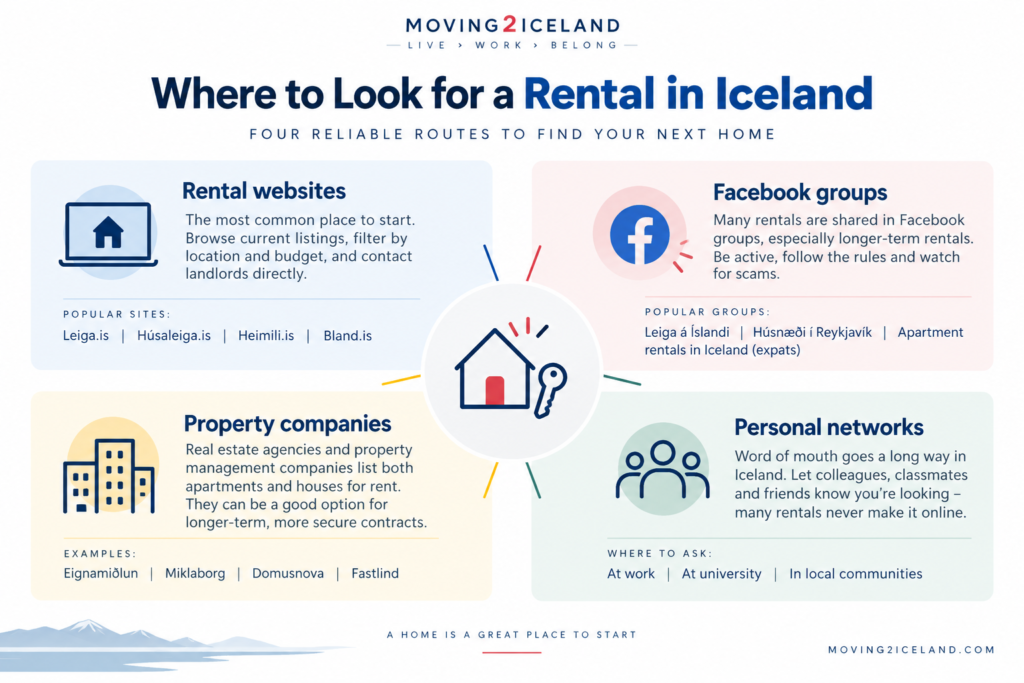
There is no single website where every available Icelandic rental appears. Your best bet is browsing several sites.
Igloo / MyIgloo
Igloo is one of the most useful places to start looking.
The platform carries rental listings and allows prospective tenants to create profiles and monitor the market. At the time of writing, it has more than 1,000 property listings across Iceland, although these include several types of property and availability changes constantly.
Igloo also offers electronic tenancy agreements based on an HMS template. Fully completed agreements can be submitted automatically to the HMS Rent Register. See Igloo’s information for tenants
That can make it particularly useful if you are trying to organise your move from overseas.
Alma
Alma is one of Iceland’s larger professional residential landlords.
The company says it owns and operates around 1,100 apartments in the capital region and elsewhere in Iceland. Its website allows you to search available homes by location, number of rooms, size and monthly rent.
Professional landlords are worth monitoring alongside private listings rather than assuming every property will appear on the same rental marketplace.
Leigulistinn
Leigulistinn has served Icelandic landlords and renters since 1995.
Unlike some free listing platforms, full tenant access to its rental database is a paid service.
At the time of writing, its published price list shows ISK 4,700 for one month of access to the capital-region list, while a two-month regional subscription costs ISK 4,900. Prices can change, so check the current fee before subscribing. Check Leigulistinn’s current pricing
Whether paying is worthwhile depends on how intensively you are searching, but in a relatively small rental market another source of listings can be valuable.
Facebook and local groups
Facebook groups are also widely used for rooms, apartments and sublets.
Try searches such as:
- apartments for rent Iceland;
- housing Reykjavík;
- rooms Reykjavík;
- housing in the particular town you are moving to;
- student accommodation; and
- newcomer or expat housing groups.
You may find more listings by searching in Icelandic.
Useful terms include:
- leiga – rent;
- íbúð til leigu – apartment for rent;
- herbergi til leigu – room for rent.
Informal advertising does not automatically mean that a listing is suspicious.
But verify who you are dealing with, whether that person has the authority to rent or sublet the property, and how the tenancy agreement will be registered before sending money.
Employers, universities and local networks
Do not underestimate personal networks in a relatively small country.
Employers may know about accommodation, particularly in hospitality, healthcare, tourism and seasonal industries.
Universities and student organisations may have their own housing networks, while colleagues and local groups sometimes hear about properties before they reach public listing sites.
A personal introduction, however, does not remove the need for a written and properly registered tenancy agreement.
How to make a strong rental enquiry
A landlord does not need your life story.
Your first message should make it easy to understand who you are and whether you are likely to be a suitable tenant.
Include:
- your name;
- what you do for work or study;
- who will live in the property;
- your preferred move-in date;
- how long you expect to rent;
- whether you can provide references; and
- whether you have employment or income documentation available.
Keep it short, polite and specific.
Having this information prepared also means you can respond quickly when a suitable property appears.
Can you rent an apartment before arriving in Iceland?
Yes – but be careful.
Remote applications and virtual viewings are possible, and some employers or relocation companies may help you arrange accommodation before arrival.
The obvious advantage is that you have somewhere to live from day one.
The disadvantage is that it is harder to verify a property from another country.
If possible:
- request a live video viewing;
- confirm who owns or manages the property;
- check that the address and photographs match;
- establish whether the advertiser is the owner, agent or existing tenant;
- confirm that any proposed subletting is authorised;
- obtain the written lease before paying;
- establish how the deposit or other security will work;
- ask how HMS registration will be handled; and
- use a traceable payment method.
If you cannot verify the property properly, temporary accommodation may be safer than rushing into a long-term lease from overseas.
What will a landlord ask you for?
There is no single application pack every Icelandic landlord uses.
You may be asked for:
- passport or other identification;
- your kennitala, if you already have one;
- an employment contract;
- proof of income or funds;
- references;
- contact details;
- your planned move-in date;
- a deposit or another form of security; and
- the first month’s rent.
Having these ready can speed things up when a suitable home appears.
Do you need a kennitala to rent in Iceland?
Not necessarily before you start looking.
Some newcomers arrange accommodation while their Icelandic registration is still being completed.
However, a kennitala – Iceland’s national identification number – quickly becomes important for many administrative processes after you arrive, and individual landlords or rental platforms may request one.
Do not assume that lacking a kennitala automatically prevents you from looking for accommodation. Ask the landlord or provider what documentation they require.
If you are unclear about how the system works, read our complete 2026 guide to getting a kennitala in Iceland.
How much money do you need upfront?
This is where newcomers can underestimate the real cost of renting.
You may need to cover:
- your first month’s rent;
- a deposit or another form of security;
- temporary accommodation;
- transport while viewing properties;
- moving costs;
- furniture or household basics;
- electricity and internet setup; and
- overlapping accommodation costs.
Imagine you find an apartment for ISK 300,000 per month and agree to security equivalent to one month’s rent.
You could therefore need ISK 600,000 before moving in, before accounting for anything else.
That is only an illustration.
There is no universal rule that an Icelandic rental deposit equals one month’s rent.
The amount and type of security depend on the agreement between landlord and tenant, so build a cash buffer into your relocation budget.
How do rental deposits work in Iceland?
A landlord and tenant can agree that security is required as part of the lease.
Importantly, this does not necessarily mean handing the landlord a large cash deposit.
Official Icelandic guidance lists several possible forms of security, including:
- a bank guarantee;
- a third-party guarantee;
- rent-payment or move-out insurance;
- a cash security deposit; and
- another form proposed by the tenant and accepted by the landlord.
If the landlord holds a cash security deposit, it must be kept in a separate, unrestricted account earning the highest available interest. Read the official guidance on rent, payments and deposits
Ísland.is also states that a tenant is entitled to the return of the cash deposit with accrued interest at the end of the tenancy if the landlord has no valid claim against it. Where no lawful claim is made, the official tenant guidance gives a four-week timeframe for repayment. See Ísland.is’s guide to renting in Iceland
Before paying any security:
- verify the landlord’s identity;
- confirm that the property exists;
- view it where possible;
- obtain the written lease;
- understand what the security covers;
- request proof of payment;
- avoid undocumented cash payments; and
- retain bank records and messages.
What bills are included in rent?
Never assume.
Some Icelandic properties include certain household costs in the monthly rent; others do not.
Before signing, check:
| Cost | What to check |
|---|---|
| Heating | Is it included in the rent? |
| Electricity | Is it included or do you open your own account? |
| Internet | Is broadband installed and who pays? |
| Building charges | Are any costs passed to the tenant? |
| Parking | Is a space included? |
| Laundry/storage | Are these included or separately charged? |
The official Icelandic tenancy guidance requires the agreement to make clear whether costs such as heating and electricity are included. See the official Icelandic renting guide
Look at the total monthly housing cost, not simply the advertised rent.
Can you rent with pets in Iceland?
Possibly – but check before committing to a property.
Dogs and cats in apartment buildings may be subject to building rules affecting shared entrances and common areas, as well as conditions imposed by the landlord.
If you are moving to Iceland with a pet:
- tell the landlord before signing;
- confirm that the property and building allow the animal;
- check whether additional conditions apply; and
- get any agreement concerning your pet in writing.
Pets can narrow the number of suitable rentals, so start looking particularly early if you are bringing one.
The new HMS Rent Register in 2026
This is one of the biggest changes to renting in Iceland this year.
From 1 January 2026, landlords renting residential premises are required to register their tenancy agreements in the HMS Rent Register – Leiguskrá HMS. Official HMS Rent Register guidance on Ísland.is
Electronic agreements created through Ísland.is are automatically linked to the register once all parties have signed.
Other approved electronic providers can also submit agreements, while existing paper agreements can be sent to HMS for registration.
If a tenancy agreement is signed by hand, the official guidance states that it must be witnessed by two witnesses. Paper agreements may take up to a week to appear in the register.
Registration creates an official record of the tenancy, including information about the property, rent and duration of the agreement.
It is also important if you later apply for housing benefits.
If somebody wants to rent you a home but refuses to provide a written agreement or resists registering the tenancy, establish why before you transfer money.
What should be in your rental agreement?
Your tenancy agreement should identify the people and property involved and clearly set out the terms of the rental.
Official guidance says the agreement should cover matters including:
- whether you are renting a room or an apartment;
- whether the agreement is fixed-term or indefinite;
- the amount of rent;
- when and how rent is paid;
- the security required and its form;
- whether heating or electricity is included;
- the condition of the property; and
- fire-safety information.
The rent amount, payment arrangements and condition of the property should not be left to verbal understanding. See the Ísland.is tenancy-agreement checklist
Before you move in, photograph the property.
Pay particular attention to existing damage, flooring, walls, appliances, windows and furniture.
That five-minute job could save a considerably longer argument when you move out.
Fixed-term versus indefinite rental agreements
A fixed-term lease runs until an agreed end date.
An indefinite lease continues until it is properly terminated.
Before signing either, check:
- how much notice is required;
- whether a fixed-term lease can be ended early;
- what happens when the agreement expires;
- whether the lease renews automatically;
- whether and how the rent can change; and
- who is responsible for repairs and maintenance.
Do not assume that every Icelandic lease has a three-month notice period.
For an ordinary indefinite residential tenancy, official guidance currently gives a six-month tenant notice period. A fixed-term agreement normally runs until its agreed end date and generally cannot be terminated early unless the contract specifically allows it.
Where a fixed-term contract includes an agreed early-termination provision, the notice period must be at least three months. Check the official termination and notice-period rules
That is why the contract matters.
Read the termination provisions before you sign, not when you decide you want to move.
Can your rent increase?
There are specific rules around rent changes.
For a fixed-term rental agreement, the parties cannot agree to change the rent during the first 12 months of the tenancy, including through indexation.
Once more than 12 months have passed, either party may request a change – for example, to bring the rent into line with comparable market rents.
Disputes about rent can be referred to Iceland’s Housing Complaints Committee. Read the official rules on rent changes
You do not need to become an expert in Icelandic tenancy law before renting a home.
But you do need to understand the rent-adjustment clause in the agreement you are signing.
Can foreigners get housing benefits in Iceland?
Potentially, yes.
Housing benefits are monthly payments administered by HMS to help eligible households with residential rental costs.
The amount depends on factors including:
- household size;
- income;
- assets; and
- rent.
Current official requirements generally state that you must:
- be at least 18;
- have permanent registration in Iceland;
- live at and have your legal address at the rented property;
- have a tenancy lasting at least three months; and
- have the lease registered in the HMS Rent Register.
The property itself must also meet certain requirements. Check the current housing-benefit eligibility rules
If your immigration application is still being processed and you only have a system ID, rather than permanent Icelandic registration, the current official guidance says you cannot yet apply for housing benefits.
Because eligibility and payment amounts depend heavily on individual circumstances, use the official housing-benefit information and calculator rather than relying on a generic estimate. Iceland housing benefits and calculator
Rental scams to watch for
Moving from overseas can make you particularly vulnerable to rental scams because you may be under pressure to find somewhere quickly.
Be cautious if:
- the rent looks dramatically lower than comparable properties;
- you are pressured to send money immediately;
- the landlord claims to be abroad and cannot show you the property;
- the advertiser refuses a live or in-person viewing;
- photographs or addresses do not match;
- you are asked to use an unusual or untraceable payment method;
- the advertiser refuses to provide a written lease;
- the advertiser avoids questions about HMS registration; or
- the person offering the property cannot demonstrate that they own it or are authorised to sublet it.
Facebook adverts and private landlords are not inherently unsafe.
The important thing is to verify the person, property and paperwork before paying.
Before you sign: final rental checklist
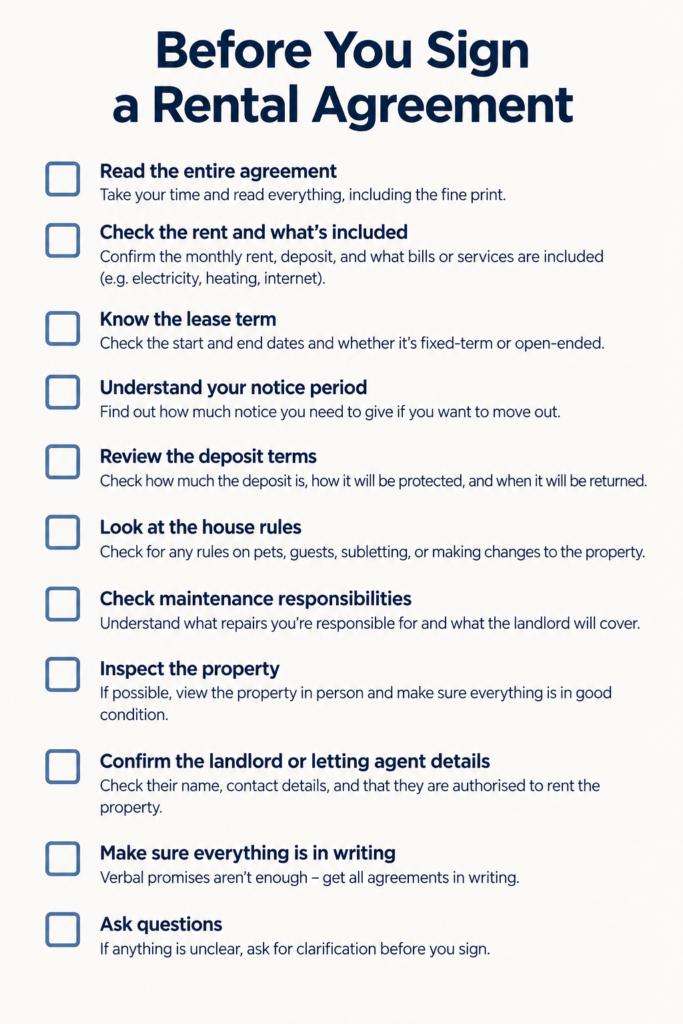
Before committing to an Icelandic rental, make sure you know:
- who you are renting from;
- whether the advertiser is the owner, agent or authorised subletter;
- whether the agreement covers a room, shared home or entire apartment;
- the exact monthly rent;
- which bills are included;
- what deposit or other security is required;
- when rent is due;
- whether the lease is fixed-term or indefinite;
- what happens if you need to leave early;
- how the rent can change;
- who is responsible for maintenance;
- whether pets are permitted, if relevant;
- whether you have documented the property’s condition;
- whether the tenancy will be registered with HMS;
- whether you have your own copy of the signed agreement; and
- whether you have proof of every payment.
If an important answer is vague, resolve it before signing or transferring money.
Renting in Iceland: FAQs
Can foreigners rent property in Iceland?
Yes.
Foreign nationals can rent homes in Iceland. Practical requirements vary between landlords, and you may be asked for identification, proof of employment or income, references and some form of security.
Do I need a kennitala to rent in Iceland?
Not necessarily to begin searching or in every individual rental situation.
However, a kennitala makes many Icelandic administrative processes easier after you arrive, and a landlord or rental provider may request one.
See our 2026 guide to getting a kennitala in Iceland for a full explanation.
How much is rent in Reykjavík?
There is no single Reykjavík rent.
Size, neighbourhood, condition, furnishings and property type all matter.
HMS recorded an average of ISK 4,291 per square metre for new market rental agreements in the capital region in July 2026. Treat that as a market benchmark rather than the expected rent for a particular apartment. See the latest HMS rental-market figures used in this guide
How much deposit do landlords ask for?
There is no single standard cash-deposit amount.
Security can take several forms, including a cash deposit, bank guarantee, third-party guarantee or insurance. Whatever arrangement you agree should be clearly stated in your lease. Official Icelandic guidance on rental security and deposits
Are utilities included in rent?
Sometimes.
Your lease should state whether costs such as heating and electricity are included. Ask separately about internet, parking, laundry, storage and any building charges.
Can I find an apartment before moving to Iceland?
Yes.
Remote applications and virtual viewings are possible, although you should be particularly careful when transferring money from overseas.
If you cannot properly verify a property, temporary accommodation after arrival may be the safer option.
Do Icelandic rental contracts have to be registered?
Yes.
From 1 January 2026, residential tenancy agreements must be registered in the HMS Rent Register. See how tenancy registration works
Can foreigners receive housing benefits?
Some foreign residents can qualify if they meet the relevant conditions.
These include permanent registration in Iceland, living at and being legally registered at the rented property and having an eligible lease of at least three months registered with HMS. Check current housing-benefit eligibility
Can I rent with a dog or cat?
Potentially.
Rules can depend on the landlord and the building, particularly where residents share entrances or other common areas.
Tell the landlord before signing and get permission in writing.
Renting in Iceland: prepare before you search
Renting in Iceland can be expensive and competitive, particularly around Reykjavík, but preparation makes a significant difference.
Start searching early. Use several rental channels. Prepare your employment and financial information. And budget for considerably more than simply the first month’s rent.
Most importantly, understand what you are signing.
The rules changed in 2026, and residential tenancy agreements now need to be written and registered in the HMS Rent Register.
Once you have secure accommodation, many of the other practical parts of settling in Iceland – registration, employment, banking and everyday life – become considerably easier.
Planning your move? Read next: