
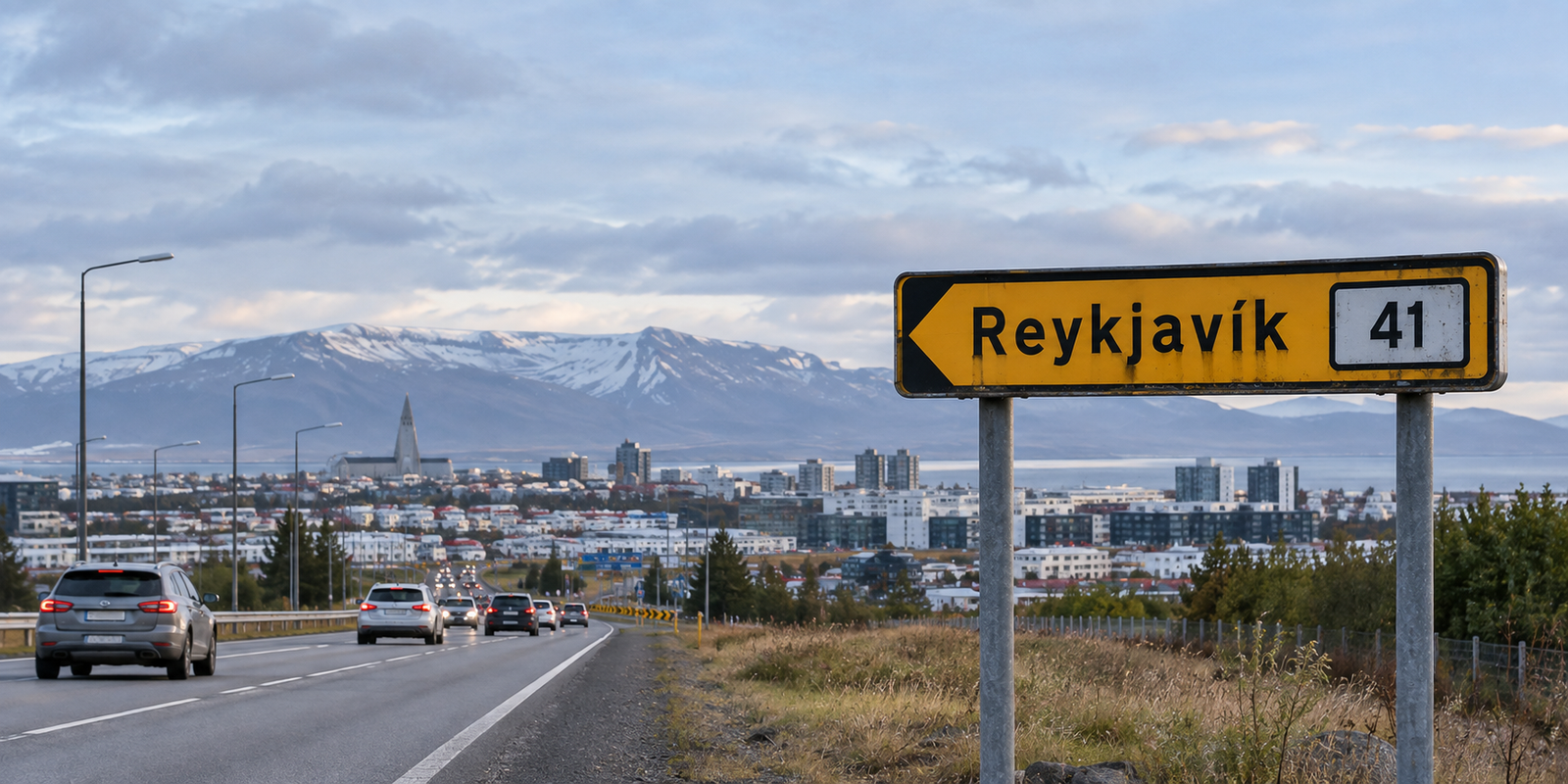
Photo: Ai generated image for Moving2Iceland: The road into Reykjavik
Last updated September 2026.
Moving to Iceland can feel strangely unreal at first.
One minute, you are planning the move, sorting documents, comparing neighbourhoods and trying to work out whether you own enough waterproof clothing.
Then suddenly, you are here.
You have a new street outside your window. A new supermarket. A new commute. New food, new systems, new routines – and a growing list of things you suspect you are supposed to be doing.
Those first few weeks can be exhilarating.
They can also be overwhelming.
The good news is that you do not need to have your entire Icelandic life organised immediately. Some things genuinely need attention early. Others can wait until you have found your bearings.
This guide walks you through your first 30 days in Iceland – what to prioritise, what can wait and where to go next when you need more detailed help.
Important: the exact process will depend on your citizenship, where you are moving from, how long you intend to stay and whether you are coming to work, study or join family. Use this as a practical roadmap, then check the official rules that apply to your circumstances.
Who’s this for?
This guide is for anyone who has just arrived in Iceland – or is about to – and wants a clearer sense of what that first month will actually feel like.
Because those first 30 days can be exhilarating. Everything is new. You are noticing things, tasting things, figuring things out and experiencing the country in a completely different way from someone who is simply visiting.
But that same newness can also be overwhelming.
There are practical things to sort out, unfamiliar systems to understand and dozens of small decisions to make at a time when you are still finding your bearings.
This guide is here to make that first month feel more manageable.
It will help you understand what needs attention early, what can wait and what you are likely to encounter along the way – so you can spend less time worrying that you are falling behind and more time settling into your new life in Iceland.
Before anything else: know which rules apply to you
Your first month will be considerably easier if you already understand your immigration and residence status.
Iceland is part of the European Economic Area (EEA), but it is not a member of the European Union.
That distinction matters because the rules differ according to where you are coming from.
EEA/EFTA citizens who stay in Iceland for longer than three months must register with Registers Iceland. That registration includes an Icelandic national ID number and legal domicile. Nordic citizens have separate arrangements, while people moving from outside the EEA will generally need the appropriate residence permit.
Do not assume that because you have entered Iceland legally, everything else happens automatically.
It often does not.
Before you arrive: make landing day easier
There are a few things worth sorting out before the plane even touches down.
You do not need to organise your entire Icelandic life from abroad.
But you can remove a lot of friction.
Get connected before you land if you can
Your phone is likely to be one of the most useful tools you have during your first few days.
You may need it to:
- use maps
- message your host or landlord
- arrange a taxi or airport transfer
- check bus routes
- access booking confirmations
- translate unfamiliar words
- contact an employer
- look up opening hours
- find somewhere to eat
- get yourself out of trouble when you take the wrong bus
Before travelling, check what your existing mobile provider charges for roaming in Iceland.
Depending on your phone and circumstances, you may also be able to arrange an eSIM before departure, which means you can arrive already connected rather than hunting for Wi-Fi at the airport.
If you prefer a local Icelandic number, you can sort that once you arrive.
Coming soon: SIM Cards, eSIMs and Mobile Plans in Iceland: The Best Options for Newcomers
That deeper guide can compare roaming, Icelandic carriers, prepaid SIMs and eSIM options so you can work out what actually suits your move.
Have somewhere to sleep – even if it is temporary
This sounds obvious, but long-term housing can take time.
Do not put unnecessary pressure on yourself to find your permanent Icelandic home before arrival.
Your first accommodation might be:
- a hotel or guesthouse
- a short-term apartment
- a furnished monthly rental
- an Airbnb-style stay
- a room with friends or family
- temporary employer accommodation
The important thing is to understand the difference between somewhere you can stay and somewhere you can potentially register as your legal domicile.
They are not always the same thing.
If you are still searching for somewhere permanent, a short-term base can buy you time to view properties properly rather than signing the first lease you see from another country.
Read next: Renting in Iceland in 2026: How to Find a Place, What It Costs and How to Avoid Mistakes
And we will also be building a separate guide specifically around short- and mid-term accommodation options for newcomers, including services that may be useful while you search for something permanent.
Days 1–3: arrive first, organise second
Your instinct may be to start completing forms immediately.
You can.
But unless something has a strict deadline, give yourself a little space.
Unpack.
Find the nearest supermarket.
Work out how long your actual commute takes.
Learn where the bins are.
Find out how your heating works.
Walk around your neighbourhood.
Buy the things you forgot.
Find the nearest pharmacy.
These small things are part of settling in too.
Make one master list
Instead of trying to remember everything, create one checklist divided into three categories:
Do now
Things with deadlines, or things that unlock other services.
Do soon
Things you will probably need during your first few weeks.
Can wait
Everything else.
Your “do now” list may include some combination of:
- making sure you have working mobile data
- completing residence formalities
- registering your legal domicile
- obtaining or confirming your kennitala
- looking for longer-term housing
- starting a job search if you arrived without work
- checking your health-insurance position
- setting up banking
- making sure an employer has what they need for payroll and tax
The exact order will vary.
But one thing quickly becomes obvious: many Icelandic systems connect to one another.
And your kennitala sits at the centre of a lot of them.
If you arrived without a job: start early
Not everyone moves to Iceland with employment already arranged.
If you are looking for work, do not wait until every other piece of your life is perfectly organised.
Start early.
That does not mean sending 50 applications on your first night.
It means getting the basics moving.
In your first few days
- update your CV for the Icelandic market
- create or update your LinkedIn profile
- identify the main Icelandic job boards
- check whether your profession requires Icelandic qualifications or licensing
- look at which employers operate in English
- begin tracking applications
- tell people you meet that you are looking
The Icelandic labour market is relatively small, which means networks and direct approaches can matter.
At the same time, do not assume that speaking English alone guarantees easy access to work. Requirements vary considerably by sector, and Icelandic can make a substantial difference in many roles.
If employment is one of the reasons you moved, treat the search as part of your first-week routine rather than something to begin “once everything else is done”.
Read next: Finding Work in Iceland: Jobs, Salaries and What Foreign Applicants Need to Know
Week 1: get your basic registration sorted
1. Register your legal domicile where required
Your legal domicile – lögheimili – is your officially registered home address.
If you intend to live in Iceland for six months or longer, you generally need to register a legal domicile. It is the place where you normally live, keep your belongings and spend your time when you are not temporarily away.
There are rules about which properties qualify.
A legal domicile must be registered at an approved residential address. Guesthouses and some forms of temporary or worker accommodation, for example, may not qualify.
If you change your legal domicile, the change should normally be reported within seven days of moving.
Practical tip
If you are renting, establish whether you will be able to register the property as your legal domicile before signing a long-term lease.
It is a much easier question to ask beforehand than to solve after moving in.
2. Get your kennitala
Sooner or later, you are going to hear one Icelandic word repeatedly:
kennitala.
This is Iceland’s national identification number.
Everyone registered as living in Iceland has one, and it is used widely across Icelandic society. You may need it for banking, government services and other parts of everyday life.
It is a unique ten-digit number connected to information held by Registers Iceland.
How you obtain one depends on your status.
EEA/EFTA foreign nationals generally apply through Registers Iceland, while people from outside the EEA usually receive their number as part of the residence-permit process.
Do not panic if everything seems to depend on it
This is one of the classic early-moving frustrations.
Service A wants your kennitala.
Service B appears necessary before you can access Service A.
Service C wants something from both.
And you are still waiting.
That does not necessarily mean something has gone wrong.
Keep copies of your applications and documents, and ask organisations what alternatives they accept while your registration is being processed.
Week 1–2: sort out your money
Once your basic registration is moving, banking becomes much easier to tackle.
3. Open an Icelandic bank account
Once you have your kennitala and the documentation required by the bank, opening a local account becomes more straightforward.
An Icelandic bank account is useful for:
- salary payments
- bills
- local transfers
- everyday spending
- connecting with other Icelandic financial services
Different banks may ask for slightly different documentation, so check requirements before applying.
And unless you have a particular reason to do so, there is no need to immediately close your account back home.
Keeping both temporarily can make international transfers and the financial transition easier.
What about moving money into Iceland?
This is one of the areas where newcomers can lose money without really noticing.
Bank exchange rates, transfer fees and foreign-card charges can add up quickly, especially if you are moving savings, paying a deposit or transferring a first month’s rent.
Before transferring larger amounts, compare:
- your existing bank
- the receiving Icelandic bank
- international money-transfer services
- exchange rates
- transfer fees
- how long the transfer will take
The headline fee is not always the important number.
The exchange rate can matter just as much.
Coming soon: Banking and Money Transfers in Iceland: The Best Options for Newcomers
That guide will look at Icelandic banks, international transfers, multicurrency services and the practical process of getting your finances set up.
4. Set up electronic ID
This is one of the things newcomers can underestimate.
A lot of Icelandic administration happens digitally.
Electronic ID – rafræn skilríki – allows you to securely prove who you are online, access public services, sign applications and documents, and use My Pages on Ísland.is.
You can obtain electronic ID through registration centres including banks, telecommunications companies and Auðkenni.
Once it is working, many things become easier.
Instead of treating every government interaction as a separate piece of bureaucracy, you start gaining access to much of your information and many services digitally.
Week 2: check your tax setup
If you are working in Iceland, do not ignore tax until the first payslip arrives.
5. Understand your personal tax credit
People aged 16 or over who are domiciled in Iceland are generally entitled to a personal tax credit, which reduces the amount of tax deducted from their salary.
For 2026, the personal tax credit is ISK 72,492 per month.
Before wages are paid, your employer needs to know whether you want to use the credit, from which month and other relevant tax information.
If you only become domiciled in Iceland during part of the year, your entitlement may be calculated according to the period you are resident.
It is a small administrative step that can have a noticeable effect on your take-home pay.
Check it early.
Week 2: understand your healthcare position
Healthcare is another area where assumptions can cause problems.
6. Check when your Icelandic health insurance begins
When you move your legal domicile to Iceland, there is generally a three-month waiting period before Icelandic public health insurance coverage begins automatically.
However, not everyone has to wait three months.
People moving from an EEA country, the United Kingdom, Switzerland, Greenland, the Faroe Islands or another Nordic country may be able to transfer existing social-security health rights and receive Icelandic coverage sooner.
If you need to apply, do so after Registers Iceland has registered your new legal domicile.
Do not assume approval will be immediate.
Confirmation may depend on information being obtained from the country where you were previously insured.
Keep your EHIC if you have one
If you are arriving from an eligible European country and still have a valid European Health Insurance Card, keep it accessible while your Icelandic insurance position is being established.
Eligible applicants may be able to use an EHIC to access covered healthcare at the same rate as insured residents while their application is being processed.
Do not throw it into a drawer just because you have moved.
Not yet.
7. Find your healthcare centre
Primary healthcare centres – heilsugæsla – are generally the first point of contact when you need ordinary medical care.
If you are not registered with a healthcare centre, you are normally assigned to the centre closest to your legal residence. You can later change your registration.
Find out:
- which healthcare centre you are registered with
- how to contact it
- how appointments work
- how prescriptions are handled
- how to use Heilsuvera
- where to seek help outside normal opening hours
For medical advice outside normal hours in the capital area, the Læknavaktin telephone service uses 1700 or 1770. For emergencies anywhere in Iceland, call 112.
Hopefully, you will never need the emergency number. Save it anyway.
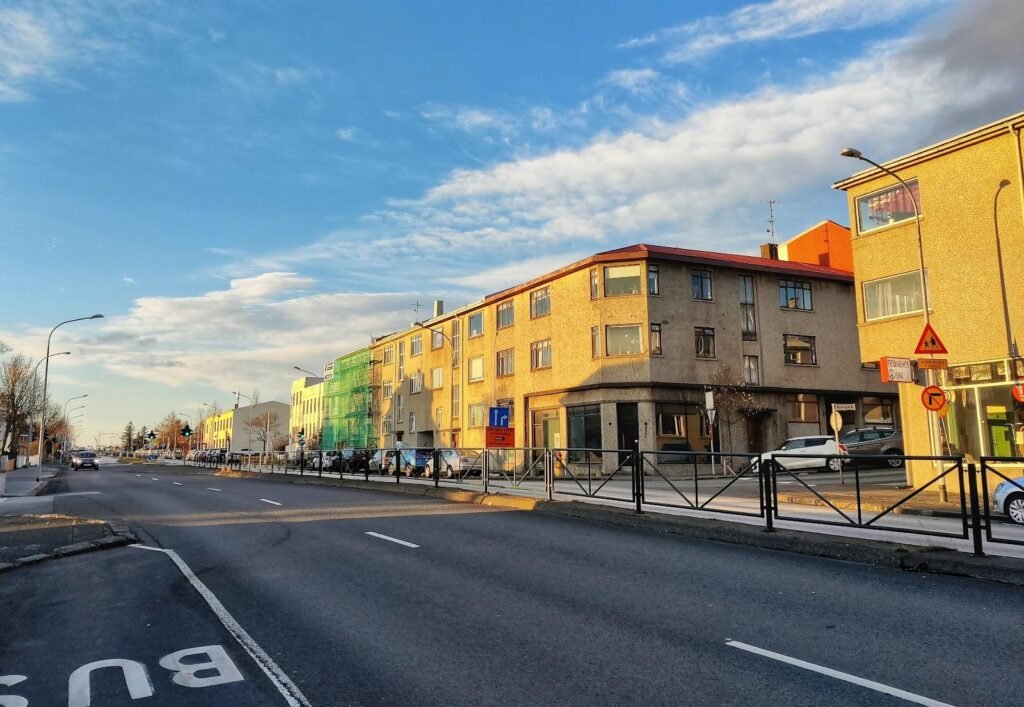
Photo: Everyday Reykjavík street life (Tejash Shah / Unsplash).
Week 2–3: start learning how your Iceland works
By now, some of the paperwork may be easing.
This is where the other part of moving begins: Ordinary life.
8. Test your commute properly
Do not judge your commute entirely from a map.
Do it.
Preferably at roughly the time you will normally travel.
A journey that looks effortless online may feel very different when you are making it at 7:45am in wind and rain.
Equally, somewhere that initially appears inconvenient might turn out to be completely manageable.
Give yourself a little time before deciding you definitely need:
- a car
- a different bus
- a transport pass
- a bicycle
- different working hours
- or simply a substantially better coat
9. Learn your neighbourhood before trying to see all of Iceland
Yes, Iceland is spectacular.
And yes, you should explore it.
But during your first few weeks, learning the ordinary geography around your home can be surprisingly valuable.
Find your:
- supermarket
- pharmacy
- bakery or café
- swimming pool
- bus stops
- recycling area
- healthcare centre
- favourite walking route
There is a difference between knowing a city and beginning to know your bit of it.
That takes repetition.
Week 3: start building a routine
The novelty of moving country can carry you through your first couple of weeks.
Then normal life begins asserting itself.
You realise you are not on an extended holiday.
There is laundry.
Work.
Bills.
Groceries.
Appointments.
Dark mornings.
And quite possibly conversations happening around you that you barely understand.
That transition is part of moving too.
10. Create a few anchors
You do not need a perfectly constructed new life after three weeks.
You need a few things that repeat.
Perhaps that means:
- swimming every Tuesday
- grocery shopping on Sunday
- calling home on Wednesday
- joining a gym
- taking an Icelandic class
- trying one new café each weekend
- walking the same route after work
Routine helps turn somewhere unfamiliar into somewhere navigable.
11. Start learning some Icelandic
Many newcomers quickly discover that they can conduct a large part of everyday life in English.
That is extremely useful.
It can also make it tempting to postpone learning Icelandic indefinitely.
Do not worry about becoming conversational during your first month.
Just begin.
Learn:
- greetings
- numbers
- basic food words
- signs you see regularly
- common place names
- some pronunciation
Even a little knowledge makes your surroundings feel less opaque.
And once you start recognising words that previously looked completely unfamiliar, there is a quiet satisfaction in it.
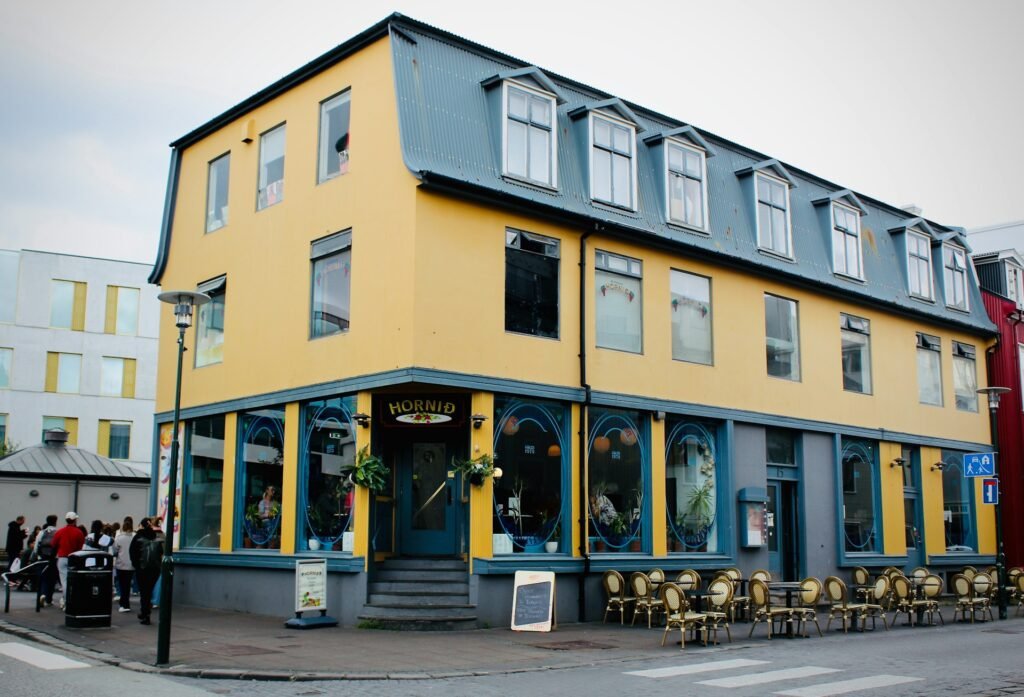
Being a regular at a local coffee shop is one way to get settled (Photo: Tejash Shah on Unsplash
Week 3–4: deal with the things that can wait
By this point, the distinction between urgent and merely important becomes useful.
Not everything needs to happen in week one.
12. Understand the driving-licence rules
If you already hold a foreign driving licence, do not assume you need to exchange it the moment you arrive.
The rules depend on where your licence was issued.
People with licences from EEA countries, the UK, Switzerland or Japan can exchange them for an Icelandic licence without retaking the driving test once they have had permanent residence in Iceland for six months.
People with licences from most countries outside those groups are generally required to take both theory and practical tests when exchanging their licence after six months of permanent residence.
So this is something worth understanding during your first month.
It is not necessarily something you need to complete during it.
13. Review your first real Icelandic budget
The budget you made before moving was an estimate.
Now you have actual numbers.
Look at what you really spent on:
- rent
- groceries
- transport
- eating out
- mobile service
- utilities
- clothing
- household setup
- entertainment
Do not be alarmed if month one looks expensive.
Moving has startup costs.
You may be buying bedding, kitchen equipment, clothing, transport passes and other things that will not recur every month.
Separate those one-off settling costs from your normal expenditure.
Then build your real monthly Iceland budget from month two onwards.
That number will be much more useful.
Three things worth sorting early
If the first month starts to feel like one endless list, bring it back to three practical questions:
Can I stay connected?
Sort your roaming, SIM or eSIM early enough that you can navigate, communicate and access services from the moment you arrive.
Coming soon: SIM Cards, eSIMs and Mobile Plans in Iceland
Can I move and manage my money?
Get your banking organised, understand how you will receive income and compare the cost of transferring money internationally.
Coming soon: Banking and Money Transfers in Iceland
Do I have somewhere suitable to live?
Temporary accommodation is fine. What matters is having enough time and information to make a sensible longer-term housing decision.
Read: Renting in Iceland in 2026: How to Find a Place, What It Costs and How to Avoid Mistakes
Coming soon: Short-Term and Mid-Term Accommodation in Iceland for Newcomers
These three areas are worth getting right because they affect almost everything else.
Things you do not need to have figured out after 30 days
This deserves saying explicitly.
After one month in Iceland, you do not need:
- perfect Icelandic
- a huge social circle
- complete mastery of Icelandic bureaucracy
- an encyclopaedic understanding of Icelandic culture
- your permanent home
- your ideal job
- your favourite everything
- absolute certainty that moving was the right decision
Relocation has a strange rhythm.
At first, almost everything is stimulating.
Then some of it becomes frustrating.
Eventually, often without noticing, ordinary things become familiar.
The supermarket stops being confusing.
You know which bus to catch.
You stop checking the map every time you leave home.
Someone asks for your kennitala and you know it.
That is what settling in often looks like.
Not one dramatic moment.
Hundreds of small ones.
Your first 30 days in Iceland: checklist
Before you travel
- Confirm which immigration or residence rules apply to you
- Check roaming charges
- Consider arranging an eSIM before you fly
- Make sure you have temporary accommodation
- Keep important documents somewhere you can access them easily
First few days
- Make sure your phone and mobile data work
- Settle into your accommodation
- Learn your immediate neighbourhood
- Confirm that your address is suitable for any registration you require
- Start looking for longer-term housing if necessary
- Start job hunting if you arrived without work
- Create one master admin checklist
First week
- Complete outstanding residence formalities
- Register your legal domicile where required
- Apply for or confirm your kennitala
- Get an Icelandic mobile number if you need one
- Check any deadlines associated with your residence route
Week two
- Open a bank account when eligible
- Compare international money-transfer options before moving larger sums
- Set up electronic ID
- Make sure your employer has the necessary tax information
- Check your personal tax credit
- Apply for Icelandic health insurance if required
- Find your healthcare centre
Weeks three and four
- Review your actual monthly spending
- Learn your transport routine
- Start learning some Icelandic
- Establish a few regular social or recreational habits
- Understand future driving-licence requirements
- Keep working on housing or employment if either is still unresolved
- Explore your neighbourhood rather than trying to see the whole country immediately
One final piece of advice: leave space for Iceland
Moving abroad can very quickly become a project-management exercise.
Residence permit.
Kennitala.
Phone.
Housing.
Job.
Bank.
Tax.
Insurance.
Another form.
Another password.
Another appointment.
Those things matter.
But they are not the whole reason you moved.
At some point during your first month, deliberately stop doing admin.
Walk down to the water.
Go swimming.
Find a bakery.
Take the long way home.
Look at the mountains.
Stand outside on one of those extraordinary clear evenings when the Icelandic light seems reluctant to disappear.
Or experience your first truly horrible horizontal rainstorm and wonder what possessed you to move here.
That counts too.
Your first 30 days are not about becoming completely settled.
They are about beginning to understand how your new life works.
Give yourself time.
Original sources and further reading
This guide was checked against official Icelandic sources current in September 2026.
- Registration of EEA/EFTA citizens – Registers Iceland
- Setting up legal domicile as an immigrant – Ísland.is
- Changing your legal domicile – Ísland.is
- Getting a national ID number as an immigrant – Ísland.is
- Electronic ID and digital services – Digital Iceland
- Personal tax credit – Iceland Revenue and Customs
- Health insurance when moving to Iceland – Iceland Health
- Registration and change of healthcare centre – Iceland Health
- Exchanging a foreign driving licence – Ísland.is